
Why I Watch Soccer

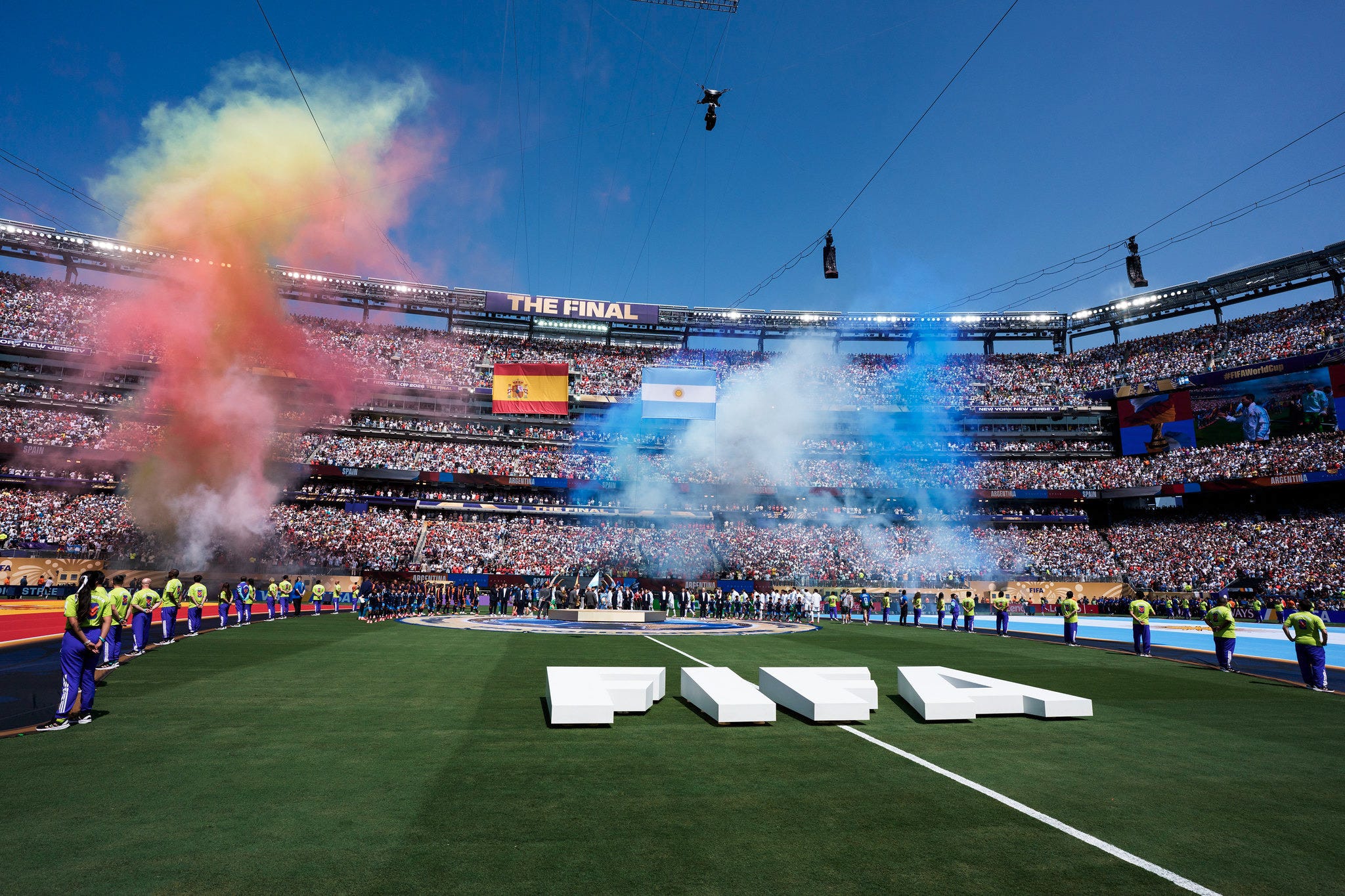
The FIFA World Cup final is the most-watched sports event in the world. Four years ago, 1.42 billion people watched it, and this year’s final from two weeks ago between Spain and Argentina is likely to surpass this figure.
Maybe you don’t watch soccer and are puzzled about what the fuss is all about. Or maybe you decided for once to watch the big game, and then were puzzled about what the fuss was all about (it wasn’t a particularly exciting match).
So, why do people watch soccer?
I can’t speak for all of them, but I can try to explain why I do.
Emotions
It’s more entertaining to watch the game if you really want one side to win. You get excited when your team attacks, scores, and wins, tense when it defends, and sad when it concedes or loses the game. Even if you’re not a huge soccer fan, watching a World Cup match where your country is playing is probably much more exciting than watching a random match.
It’s obviously more fun to watch when your team wins, and those usually make the best memories. For me, the most memorable ones would be the 2022 WC final, where Messi finally won his World Cup in a thrilling 6-goal game against France after a penalty shoot-out, or FC Barcelona’s comeback against PSG in the 2017 Champions League at Camp Nou.1
But there’s something to be said for being on the losing side as well. When Slovakia got eliminated from the Euros 2024 (after a beautiful Bellingham equalizer in stoppage time) I was bummed for several days, which definitely wasn’t fun. Still, it’s peculiar that a soccer game can make you feel sad for several days! I think it’s a good opportunity to experience negative emotions in a constrained environment, where nothing really important happened. This may be similar to why people watch great tragedies — experiencing deep emotions, even if negative, is enriching in a way.
If having a team to root for you seems alien: maybe you watched a movie or a TV series, or read a book, where you really liked some character, and then were just more invested in what happened to them, happy when good things happened to them, etc.2
Social aspect
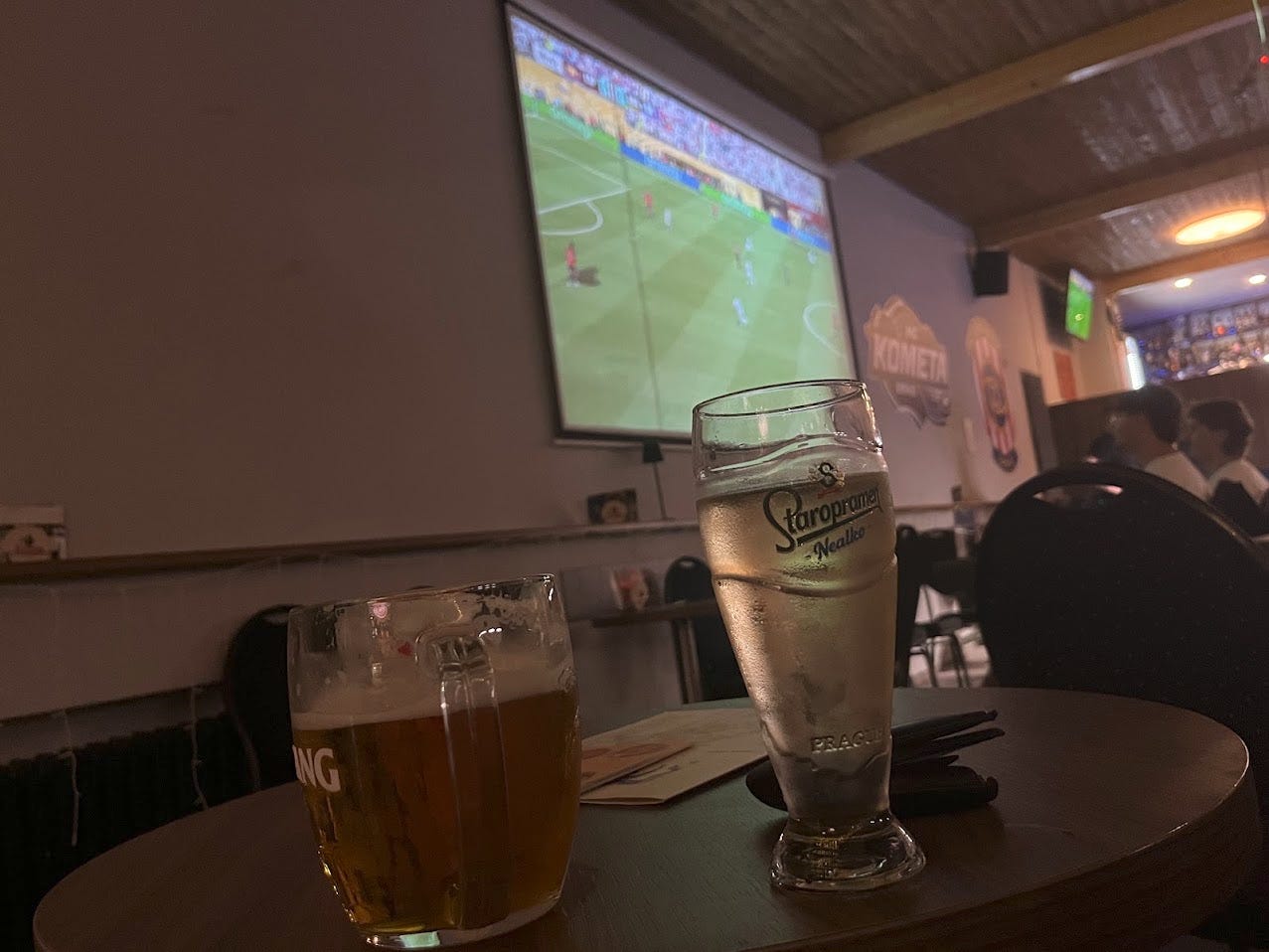
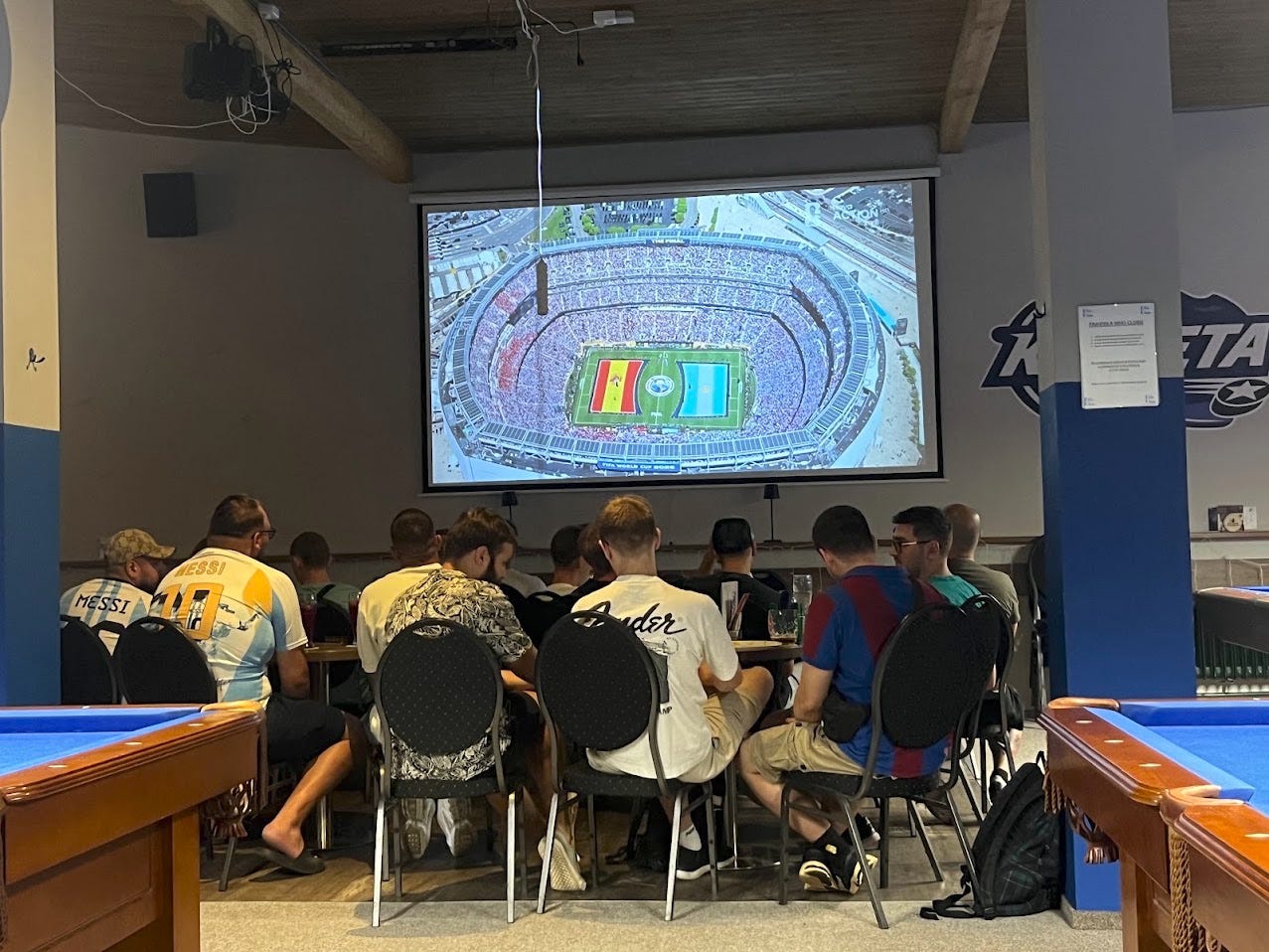
Watching soccer is, like most things, usually more fun in a group than alone. The emotions you experience are stronger because you share them with other people.
I also think that having a game turned on is a good backdrop to eating or having beers or talking to someone, because you can continuously adjust how much to focus on the TV / conversation depending on how eventful the game is.
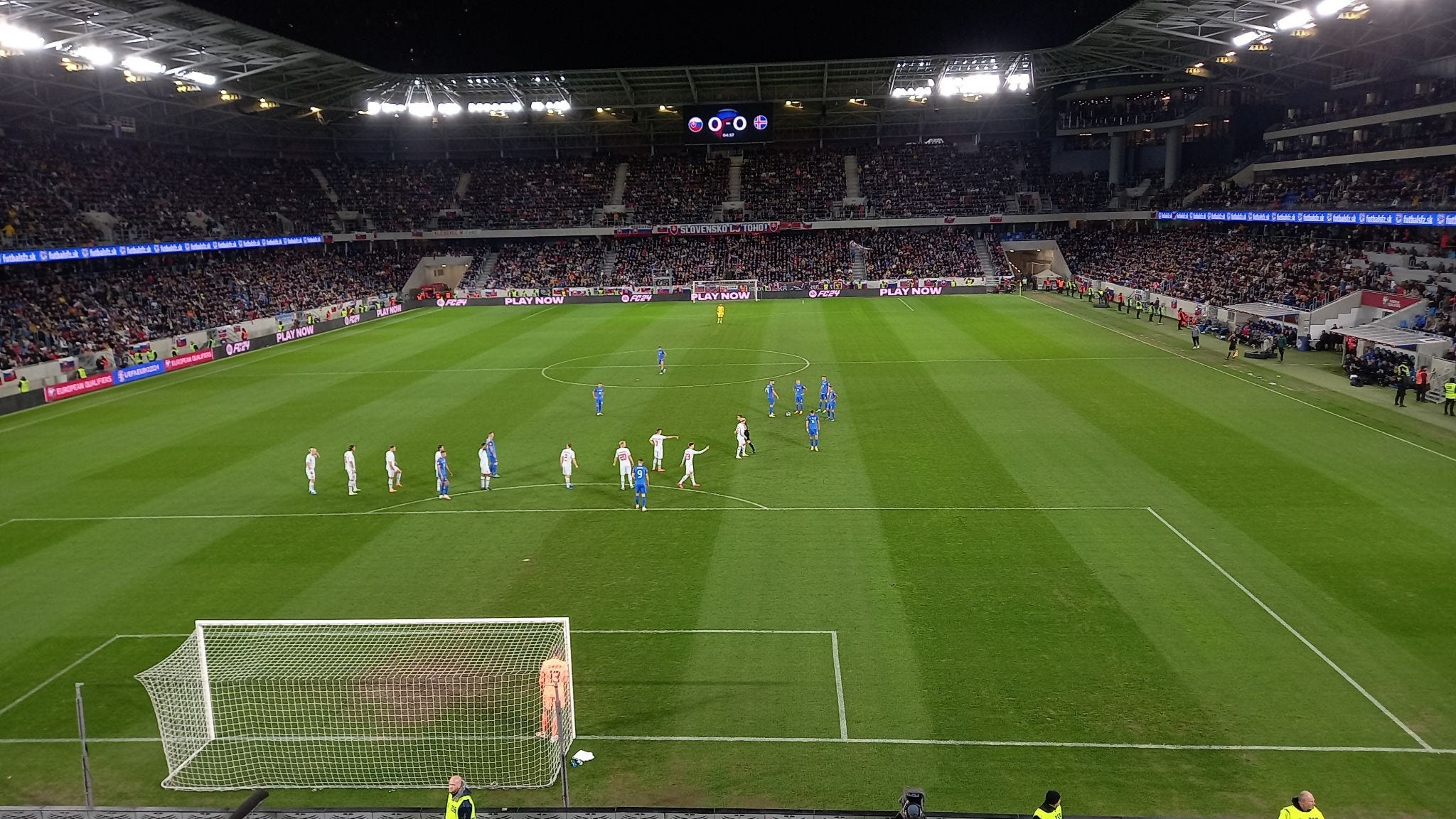
Also, watching the game in person is of course a much more intense experience than watching it on TV — like seeing your favorite artist live vs. streaming the concert.3
Aesthetics — micro level
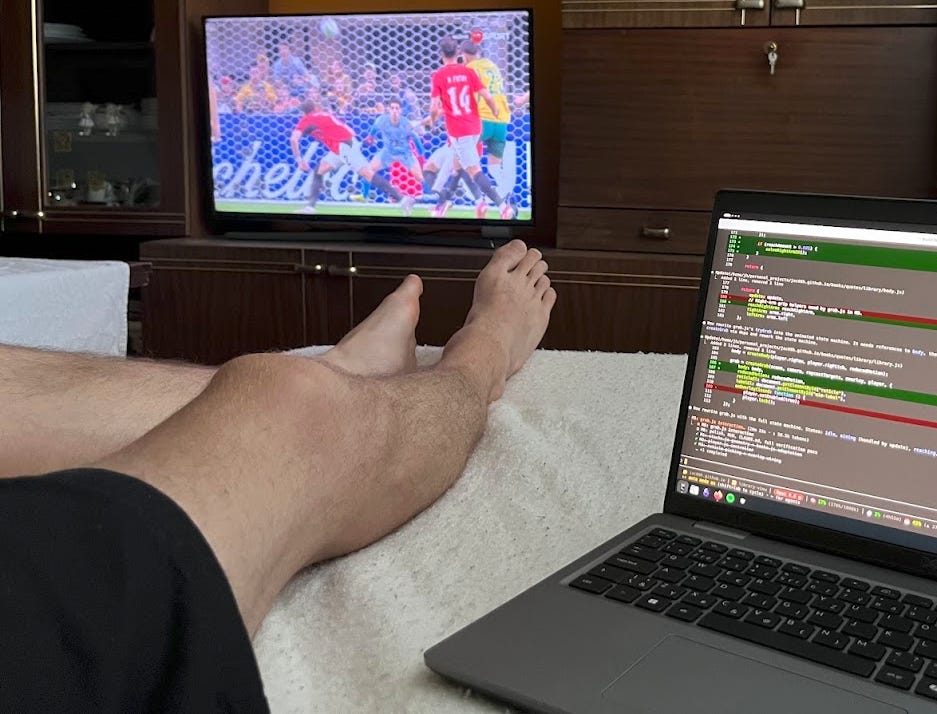
Soccer can look beautiful. Take for example some moves like the ones shown in this video — it’s just so cool to see this happen in a game! But a big part of the appeal is the appreciation for how difficult it is to actually pull off these moves, which is harder to grasp if you’ve never played the game. I notice this difference when watching e.g. ice hockey (I’ve played like once) and soccer (played competitively until my late teenage years) -- the ice hockey skills look impressive and difficult to pull off, but for soccer, I can almost viscerally feel how difficult that was.4
This could be similar to how people appreciate art. It is beautiful and pleasing to look at, but I’m sure painters can appreciate Mona Lisa much more than I ever could.
Aesthetics — macro level
Beyond individual skills, there’s also a lot to appreciate in the tactics the teams use, like style of attacking, countering the opposition’s strengths, etc. This is even harder to see if you’re not used to watching/playing. The TV commentary would probably explain some of these things, but they are harder to appreciate.
For example, the Spain vs. France semi-final was on one level a pretty boring game with not that much action, with the Spanish having most of the possession with many passes and controlling the game throughout. But that was actually cool to watch! Like, France has probably the best attack in the world, and it was remarkable to see Spain be able to control the game like that.
This is also something you can think about or talk about during the game, things like why France’s attack was so useless, what substitutions the coach can make to influence the game, and so on.
Characters and storylines
It’s more fun if you recognize some of the players, know where they currently play, some recent controversies or memes. Or maybe there’s some particular rivalry between the players, or they’re best friends but now play against each other, etc. Otherwise it can seem just like 20 random guys running around.
Think of a random break-up song. It may sound like hundreds of similar other ones, but if you know the artist and have followed them on social media while that break-up was happening, it’s just much different to listen to it.
There are also some rivalries between clubs or nations which give the game some deeper story. Some match-ups even have their own Wikipedia pages.
Unpredictability
It’s much less compelling to watch the game if you know how it ends; the unpredictability is a big part of the fun. And it’s surprisingly hard to re-watch the highlights or a game without spoilers — even if you manage to avoid any related news, the highlight videos usually contain the result in the title and in the graphics in the first seconds of the video.5
Some matches are naturally better than others, but you never know in advance what kind of match is about to ensue. In fact, perhaps the fact that only some matches end up being great is what makes watching live games more attractive (cf. variable-ratio schedule). Sure, sometimes it is boring, but it’s all worth it for seeing the occasional banger of a match live.
These are the main reasons I could come up with, but there’s probably more going on at the sub-rational level which is harder to articulate (or even be aware of). Still, I hope this helps you to understand your soccer-watching friends better!
For the most part, having a favorite team isn’t really a rational decision. I think the reason why FC Barcelona is my favorite club is that ... FC Barcelona was quite successful and popular when I was young and beginning to watch soccer? And then this got reinforced during the years by watching comparatively more FCB matches than other teams and so on. This is probably actually the case for most soccer fans.
Or you hated some character and didn’t want anything good to happen to them and yes you also have this with soccer and for me this would be Real Madrid I’m sorry.
It does come with some trade-offs in the watching experience though — you usually have a worse view than on TV, don’t get to see slow-motion replays, …
A couple of years back, I had to stop playing because of an injury. I remember that after a couple of weeks passed, I noticed that the experience of watching soccer changed in a strange way. It now felt much less active — almost as if my body on some level mimicked the movements of the players, and had now lost the muscle memory to do so. I wonder if there’s any research on this or if I’m just making it up.
My current very non-sophisticated way of watching highlights without knowing the results is to ask my wife to find the video, put it in full-screen mode, and skip through the first seconds until the graphics disappear while I keep my eyes closed. But I don’t bother her with that often.